





 0
0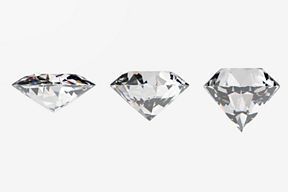
How to Buy Diamonds: 4Cs, Shopping Tips & More
The 4Cs Of Diamonds
For decades, diamonds have been graded by the 4Cs: cut, color, clarity, and carat. While these standards help guide the process of buying a diamond, they cannot fully capture what makes a stone truly exceptional. Two diamonds can share identical grades yet appear entirely different in real light. True beauty is shaped by craftsmanship, proportion, balance, and the trained eye behind the selection.
Cut
“Cut” refers to how a diamond’s facets , proportions , and symmetry work together to interact with light. A beautifully cut diamond reflects greater brilliance, fire, and scintillation, giving the stone life and radiance. Because cut has the greatest impact on a diamond’s overall beauty and light performance, it is often considered the most important of the 4Cs. Exceptional cut quality creates balance, proportion, and craftsmanship that can be seen not just on paper, but in the way a diamond comes to life in real light.
Color
Color measures how white or colorless a diamond appears and remains one of the most important factors when buying a diamond. While the standard D–Z color grading scale provides a technical framework, many differences are subtle to the naked eye. Understanding how color interacts with cut, light, and overall balance is what reveals a diamond’s true visual beauty and presence beyond technical grades alone.
Clarity
Clarity refers to the natural characteristics formed within a diamond as it develops. While clarity grades help evaluate the presence of inclusions and blemishes, many are microscopic and invisible to the naked eye. Understanding how clarity interacts with cut, brilliance, and light performance is what ultimately defines a diamond’s visual beauty, presence, and value beyond technical perfection alone.
Carat Weight
Carat measures a diamond’s weight, not its visual size. While larger carat weights are often associated with rarity and value, two diamonds of the same carat can appear entirely different depending on cut, proportion, and craftsmanship. Understanding how carat weight interacts with light performance and overall balance is essential when buying a diamond, as true beauty is defined not only by size, but by how a diamond comes to life in real light.
Shape
Shape refers to a diamond’s overall form and is often the most personal part of the diamond selection process. Each diamond shape interacts with light differently, influencing its brilliance, visual size, and overall appearance. From the timeless elegance of round brilliant diamonds to the elongated look of oval and emerald cuts, every shape offers a distinct balance of beauty, proportion, and style. When buying a diamond, understanding how different shapes compare in appearance and value can help guide the right choice for both personal preference and budget.
Certification
Diamond grading reports provide an independent evaluation of a diamond’s cut, color, clarity, and carat weight, helping guide the process of buying a diamond with greater confidence. Issued by respected gemological laboratories such as GIA and IGI, a diamond certification offers insight into a stone’s quality, proportions, and overall characteristics. While grading reports provide an important technical foundation, they cannot fully measure a diamond’s brilliance, balance, or visual beauty in real light.
Putting It All Together With Diamond Quality
Choosing a diamond today offers more transparency than ever through the 4Cs and independent diamond grading reports. Certifications from trusted laboratories such as GIA and IGI provide important insight into a diamond’s cut, color, clarity, and carat weight, helping guide more informed diamond buying decisions. But while grading reports establish a technical foundation, they cannot fully capture how the 4Cs interact to influence a diamond’s brilliance, balance, and visual beauty in real light.
Every certified diamond on Blue Nile is independently graded and carefully evaluated to meet Blue Nile’s standards for beauty, balance, and craftsmanship—bringing greater confidence to the diamond selection process.
Colorful Diamonds and the 4Cs
Unlike traditional white diamonds, fancy color diamonds are prized for the presence and intensity of their natural color. Formed under exceptionally rare conditions, these diamonds can appear in hues such as yellow, pink, blue, green, and brown, with color rarity often playing a significant role in a diamond’s value. When buying a fancy color diamond, understanding how color distribution, cutting, and craftsmanship interact is essential, as expert cutting plays a critical role in maximizing the stone’s beauty, balance, and visual impact.
How To Buy A Diamond
The 4Cs—cut, color, clarity, and carat weight - measure quality, but they don't capture the full visual experience of a diamond. While these grading standards provide an important foundation, they cannot fully capture how a diamond will appear in real light. True beauty is shaped by the balance of cut, proportion, brilliance, and craftsmanship working together.
At Blue Nile, diamond selection goes beyond certification alone, with every diamond carefully evaluated for light performance, visual beauty, and overall balance to help guide more confident diamond buying decisions.
Further Diamond Education Reading
Looking for more diamond guides, buying tips or details about the 4Cs? Explore more of our diamond education pages:
Diamond Buying Guide FAQs
Explore our diamond education and buying guides to better understand how the 4Cs — cut, color, clarity, and carat weight—work together to shape a diamond’s beauty, brilliance, and value. Learn how craftsmanship, proportion, and light performance influence a diamond beyond its grading report, and discover how Blue Nile standards help identify diamonds selected not only for their technical quality, but for their balance, visual beauty, and brilliance in real light.
Diamond beauty isn't defined by a single grade. While the 4Cs — cut, color, clarity, and carat weight—provide an important framework for evaluating a diamond, true beauty comes from how these characteristics work together. The most beautiful diamonds are often defined not by one perfect grade, but by the balance of brilliance, proportion, light performance, and visual appeal that creates a look and presence unique to each stone.
Among the 4Cs, each contributes differently to a diamond's character —it depends on the diamond shape you prefer and what you value most. Many experts, however, prioritize cut, as it has the greatest impact on a diamond’s brilliance and sparkle. Ultimately, the best diamond is one that balances all four characteristics—something a diamond expert can help guide based on your priorities.
No single “C” is inherently the least important when buying a diamond. It depends on your personal preferences, priorities, and budget. However, many buyers can prioritize certain characteristics over others, depending on where the differences are most visible to the naked eye.